

Ready to leverage your property with a Loan Against Property (LAP)? While property valuation, interest rates, and repayment terms matter, the real friction point where applications stall isn’t the property itself; it’s the paperwork. Getting your documents required for loan against property in order upfront is the single biggest accelerator for your application.
I’ve seen strong applicants hit roadblocks because documentation wasn’t comprehensive, current, or correctly presented. It’s not just about having *a* document, it’s about having *the right* document, in the *right format*, for *every* piece of the puzzle. Understand the ‘why’ behind each document, what story it tells the lender, and how it reduces perceived risk. Honestly, this is where most folks drop the ball. Get this right, and you’re already ahead of 80% of applicants.
Building Your Case: Documents required for a Loan Against Property
Your loan application is a legal and financial autobiography. Each document paints a picture of your identity, stability, and repayment capacity. Lenders like Vraj Fund Sector assess you, the borrower, as rigorously as the collateral. This foundational stack is where it begins; any missing piece slows the process.
Is Your Identity Proof Really Enough?
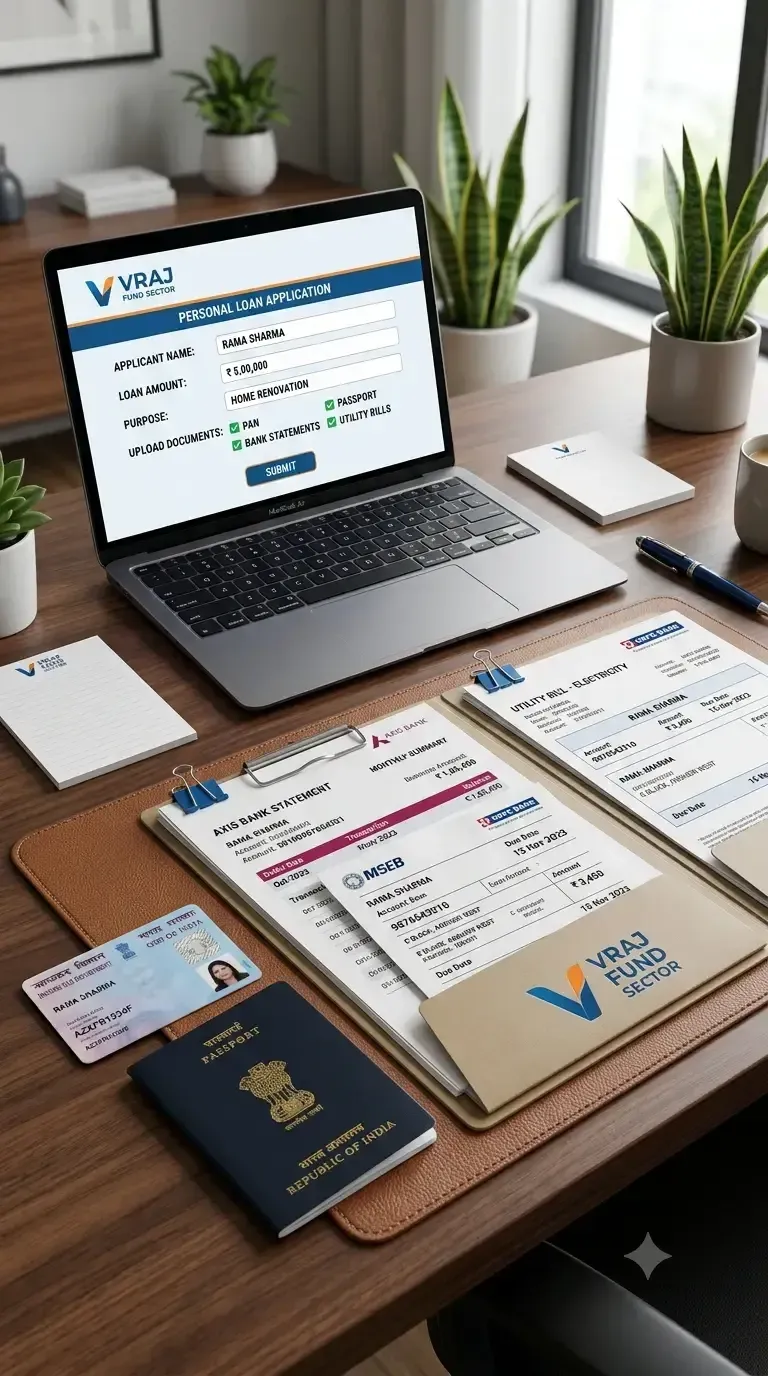
For a property loan, lenders need more than basic ID; they must unequivocally establish who you are. Ensure your name, date of birth, and signature match across all documents. Minor inconsistencies, like an initial instead of a full middle name, trigger deeper scrutiny. We typically ask for your PAN card, Aadhaar card, voter ID, or passport. The document must be clear, unexpired, and perfectly consistent with all other information. Mismatches cost time.
What Does Your Address Proof Actually Prove?
Your residential address signifies stability and permanence to a lender, verifying your location for communication and risk assessment. We look for recent utility bills (electricity, gas), bank statements, or a rental agreement if you don’t own. Recency is key; most lenders require proofs no older than two or three months. If your address changed, provide the most current proof. For rentals, ensure the agreement is properly registered and current.
“The real friction point, the place where applications often stall, isn’t the property itself, it’s the stack of paperwork you need to assemble. Getting your documents in order upfront is not just a formality, it’s the single biggest accelerator for your application.”
The Property Papers: Proving Ownership and Legality
Property documents are critical; they form the legal backbone of the transaction. Any ambiguity or missing link can derail your application. Lenders must be certain of your ownership, the property’s legal standing, and its marketability in case of default.
What Actually Proves Your Property Ownership?
Proving ownership requires an unbroken chain. Start with the Sale Deed or Conveyance Deed. For inherited property, provide the Will or succession certificate. Cooperative society flats need the Share Certificate and Allotment Letter. We also require the property’s latest tax receipts and an Encumbrance Certificate (confirming no existing legal dues). A clear title is paramount. Any dispute or claim, even minor, is a major red flag. We seek clean, undisputed ownership.

Are Your Property’s Legal and Technical Documents in Order?
Beyond ownership, we need to understand the property itself. The Approved Building Plan or layout plan is key, showing construction aligns with municipal approvals. Any modifications also need approval. A No Objection Certificate (NOC) from relevant authorities is required if the property is part of a complex or needs clearances. The Occupancy Certificate confirms the building is safe and fit for occupation. For leased land, the Lease Deed is central. These documents ensure the property is legally sound, free from complications that could impact its value or the lender’s security.
Ready to unlock your property’s potential? Understanding the documents required for loan against property is your first step. Don’t let incomplete paperwork delay your financial goals. Start prepared.
Frequently asked questions
What is the most common reason for a Loan Against Property application being rejected due to documents?
Inconsistent income proof or an unclear property title often cause rejection. Lenders need verifiable, stable income and undisputed legal claim to the property. Gaps or discrepancies here lead to rejection or significant delays.
Can I get a Loan Against Property if my property documents are not in my name?
Generally, no. The applicant or co-applicant must legally own the property. Clear, undisputed ownership is fundamental as the loan is secured against this asset. For family property, proper legal transfer or a co-applicant who is a legal owner is necessary.
How old can my income proof documents be for a Loan Against Property?
For salaried individuals, lenders typically require the last 3-6 months of salary slips and bank statements. For self-employed individuals and businesses, ITRs and audited financial statements for the last 2-3 years are standard. Older documents don’t provide a current financial picture.
Is a property valuation report part of the required documents for a Loan Against Property?
While not a document *you* provide upfront, the lender arranges an independent property valuation as part of due diligence. This report determines the maximum loan amount based on market value.
What if I’ve lost some of my original property documents?
This is a significant issue. You’ll need certified copies or duplicates from relevant issuing authorities (e.g., sub-registrar’s office, municipal corporation). Missing original property documents can severely hinder or prevent LAP approval until replaced.